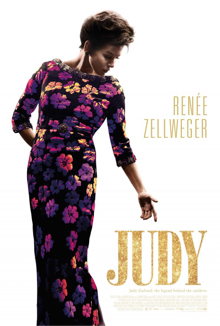
There’s no place like home on a stage as a fantasy respite from a troubled life. Rupert Goold’s Judy (B) is the anticipated biopic with Renée Zellweger playing actress/ songstress Judy Garland in the fading fog of a salvage effort for money and maternal rights while in residency at a London concert hall. The story is slight, and the supporting characters make very little impression, but “Judy via Z” is a brass band of a performance. Ms. Zellweger finds the soaring voice (literally) and stirring humanity in a tragic real-life legend gone too soon. Through the haze of booze and pills, under puckered makeup and vice-grip hair and in poignant backlot flashbacks of being a controlled child performer in the Hollywood Studio System, there’s a stunning character portrait here. Goold conjures warm nostalgia amidst the melancholy and even captures some witty moments of acerbic humor. The music numbers don’t quite achieve the pulse of the moments in the margins, but you won’t want to miss a trip over the bittersweet rainbow with this talented woman of incomparable smarts, heart and courage.
The true wolves of Wall Street have arrived, and they’re adorned with bling and chinchilla. The latest addition into the hall of fame of superb real-life crime dramas is Lorene Scafaria’s Hustlers (B+), buoyed by outstanding performances from Constance Wu and Jennifer Lopez as exotic dancers who devise a scam to drain the credit cards of Wall Street clientele in the aftermath of last decade’s financial crisis. Scafaria’s visceral storytelling and exciting camerawork puts viewers directly in the action and elicits sympathy from characters who exhibit mixed motivations. Lopez delivers a performance of a lifetime as the queen bee of an unlikely hive of gangsters. She assumes the demanding role with brute force physically and emotionally. The film’s unapologetic glimpse at a transactional culture and its effect on friends and family gives it a pedigree to be remembered as awards season gets underway.
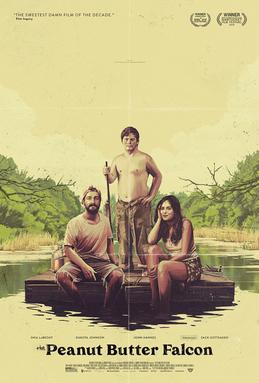
A feel-good odyssey in the milieu of a Mark Twain tale, Tyler Nilson and Michael Schwartz’s Peanut Butter Falcon (B+) wins over cynics with career-best performances from two young actors and an introduction to another indelible character plus an easygoing and authentic sense of human adventure. After escaping a residential nursing home to pursue his dream of becoming a pro wrestler, a man who has Down syndrome (joyously played by Zack Gottsagen) befriends an outlaw (Shia LaBeouf) who becomes his coach and ally. Dakota Johnson is the counselor on the hunt through North Carolina’s Outer Banks for the coastal castaways. Through boat chases and Baptisms, gun fights and hideaways, the human bonds become increasingly heartfelt. The final reel sputters a bit after already securing the glory of its fabulous fable. Familiar faces abound, including Bruce Dern, Thomas Haden Church and John Hawkes in supporting roles. The film is sweet without becoming saccharine, and the characters stick to the roof of your soul.
Some things that don’t seem to naturally go together can create nice harmony, like the frustrated Muslim teen in rural Thatcherite England and his newfound muse, working-class American rocker Bruce Springsteen. Having played in a similar milieu with a girl who wants to bend it like her soccer hero, Gurinder Chadha crafts her latest coming of age dramedy Blinded by the Light (B) with a gentle and loving touch that transcends her story’s sometimes color by number conceits. Casting her protagonist with the talented Viveik Kalra is the first win, and although some of the exposition is clunky and techniques labored, you can’t help but root for this spry hero. The handful of songs by “The Boss” provide a fantasy foil to both the teen’s mundane struggles with his parents, finding love and testing his mettle as a writer as well as a larger commentary on the xenophobia and class warfare of 1987 British politics as it plays out in a provincial community. The musical sequences feel as awkward and amateur as the tentative young man being inspired by them (this is in fact a compliment), and the sentiment generally pays off with an authentic supporting cast. It all works better than it should, given some head-scratching plot points which don’t all get resolved. The film is ultimately a marvelous family film and a giddy glimpse at how you should go about borrowing the best traits from your idols when endeavoring to find your own voice.
For a movie about looming death, Lulu Wang’s The Farewell (A) is a surprisingly joyous work. Her understated film is a near note-perfect glimpse at family dynamics as ordinary individuals endeavor to unravel the responsibilities of adulthood while confronting cultural dynamics in flux. Aspiring Chinese-American writer Billi, deftly played by Awkwafina, visits her Nai Nai (Mandarin for grandmother), beautifully embodied by Zhao Shuzhen, in Changchun, China for a poignant occasion. Although Nai Nai has a terminal illness, her family chooses to abide by a longstanding tradition to “carry the burden” for the matriarch and engages in a conspiracy to conceal the diagnosis from her. While the spry protagonist initially rejects the notion of deceiving her beloved relative, a series of heartfelt events bring insight and balance to a woman caught between worlds. Wang strikes a magnificent consistency of tone in telling this familial tale of the immigrant family’s return to the homeland, and she draws sincere and sentimental performances from her talented female leads. Although she also displays melancholy dramatic chops to great avail, Awkwafina’s humor is the tender translator at the film’s center. This cinematic family is one to remember and its story one of the delightful sleeper hits of the year.
One of the film industry’s most notorious writer/directors slows his roll into leisurely paced comedy and doesn’t quite succeed until things get violent. He’s clearly better at the Spaghetti Western than The Decline of Western Civilization. Quentin Tarantino’s Once Upon a Time…in Hollywood (B-) explores how movie stars are always one step away from their big break, whether because of talent, typecasting or breakout performances or, more commonly, because they join a celebrity entourage or get invited by famous neighbors to a cocktail. It’s no coincidence that two of the biggest stars in the world – Leonardo DiCaprio, portraying a boozy actor in career decline, and Brad Pitt, playing his stuntman and designated driver – steal the show with wile and charm. They deliver a lot of yummy tapas in the movie, but it doesn’t add up to a fully satisfying meal. Pitt is the charismatic one here, with a cadence and style he has honed before in the auteur’s revisionist history universe; quite frankly, he’s really good in his every sequence and has uncanny chemistry with an animal co-star. With a less interesting and underwritten character, DiCaprio lacks intrigue and consistency. He’s ironically at his best in a “movie within the movie” when his character is actually acting. The discarded duo of cowboy and fighter with a backdrop of a classic industry in upheaval almost seems like the makers have Toy Story 2 on the mind. Tarantino is, of course, endlessly fascinated with movie lore, so he includes in his spotty ‘60s pastiche some gorgeously filmed milieus and commentary about the transition of the Golden Age of Hollywood to something much different. He eschews many of his usual flourishes, and without a better style to replace them, they are missed. Subplots with Al Pacino and Margot Robbie build on the film’s themes but don’t ever become center stage in a captivating way. Boy, are there some great set pieces and play sets, including a Hollywood Hills home, two insider Mexican restaurants and a former Western movie backlot inhabited by Charles Manson acolytes. It’s a film full of imaginative notions not fully realized. Like a grindhouse double feature, this feels like a talky two hour character study followed by a thirty minute short in which those characters actually get to do what we’ve been wanting them to do all along.
Director Jon Watts follows up his Marvel Universe reboot of the web-slinging series with the returning, utterly charming Tom Holland conveying convincing spectacle in the title role of Spider-Man: Far from Home (B), a worthy but overly busy Spidey sequel. This installment finds our hero mourning the loss of a fellow superhero while juggling a high school European field trip in which he’s looking for a romantic hook-up with MJ played with sass by Zendaya and battling emerging supervillain Mysterio, a mixed bag of a Jake Gyllenhaal performance. The teen angst is the best part; the set-up for the epic action in an augmented reality showdown is curiously half-baked. Holland’s Peter parkours, trapezes, amazes and teases through it all and makes this episode worthwhile viewing. The film is fast, funny and occasionally tender.
Welcome to playland purgatory as Woody and his island of misfit toys ponder the post-Andy afterlife. Josh Cooley’s Toy Story 4 (B+) explores what lies beyond for the playthings of yesteryear as their very reason for being – the owner who needed them for years – fades to a distant memory. The characters must heed their inner voices to summon what comes next. Told through the joint metaphors of a creepy antique store populated by capricious and dead-eyed vaudeville dummies who cling to the past and a kaleidoscopic carnival full of color, imagination and possibilities, there is more subtext afoot in the film than meets the very entertained eye. Lushly rendered and tenderly told, this tale takes a moment to gain momentum but ultimately delivers solidly. Although most of the usual ensemble members are sidelined so the cowboy protagonist can seek his fortune while playing guardian angel to the timid little girl Bonnie, mentor to her Gumby-esque arts and craft project Forky and potential love interest to Bo-Peep, the streamlined approach enlivens the quality of storytelling. Bunny and Ducky (played by Key & Peele) are hilarious additions as mischievous mavens of the midway. This is a splendid family film with messages at work for multiple generations about the stories we still have to tell, about trashing assumptions and treasuring the next chapter.
There’s more pleasure than guilt in enjoying this guilty pleasure as director Tate Taylor collaborates with Octavia Spencer, his muse from The Help, for a memorable, against-type, unhinged performance in the psychological thriller Ma (B). When a lonely veterinary assistant starts opening her basement to a quartet of partying teens, it becomes clear something sinister is afoot in her drug and alcohol crazed makeshift speakeasy. In the spirit of Misery, Carrie or One Hour Photo, there’s a disturbing backstory to the central character’s plight and a method to the madness. Spencer nails the macabre mood swings of a character who longs to fit in with the in-crowd, and she brandishes a smartphone and ruthless cunning as weapons of choice. For every routine resolution, there’s also a disturbing detour, including some surprising props and prosthetics; and the sometimes preposterous story works as perverse entertainment largely because of the subversive nature of Spencer’s unflinching presence. The film practically begs for the call-back, “No. She. Did Not.” The teen actors including Diana Silvers and Gianni Paolo are authentic and engaging, and so are Spencer’s contemporaries including Luke Evans, Allison Janney and Juliette Lewis, the latter of whom has some satisfying echoes of her Cape Fear role. The chocolate icebox pie Taylor and Spencer served eight years ago has aged into a new mocha bonbon, a dish of revenge served cold by a woman scorned. By the time the film reaches its delicious denouement, you may find yourself grinning from the thrill and audacity of it all.
Dexter Fletcher is the director who finished filming Bohemian Rhapsody after its filmmaker was dismissed and further flexes his love of musical storytelling in the Elton John biopic Rocketman (B-), a motion picture whose blissed-out protagonist is rather hard to get to know, even after a whole film about his life has unspooled. Taron Egerton is convincing and charismatic in the lead role, and Jamie Bell is also enjoyable as Bernie Taupin, the musician’s longtime lyricist and friend. The story, told in both the musical style of characters breaking out into song and sequences reenacting live performances, gets glowing support in terms of flamboyant costumes, buoyant choreography and Bryce Dallas Howard in a juicy role as the musician’s mum. Unfortunately the plot is inert, and stock characters like the agent/love interest played by Richard Madden are crocodiles who fail to rock. Many of the jukebox musical numbers come to brilliant life with delightful orchestrations, especially “Saturday Night’s All Right for Fighting,” “Tiny Dancer” and “Your Song.” However, some favorites from the catalogue are oddly missing or marginalized, and John’s character choices are mainly muddled in a drug and alcohol fog. Much more bittersweet than celebratory, the film is crying out for a drying out, and the ultimate detoxifying denouement is begging for an audience still standing by the end, but sorry seems to be the prevailing word.
Warner Bros. and Legendary Pictures present a new film in the monster franchise.
The kaijū film genre, marked by fantastical creatures storming world cities, gets epic treatment in Michael Dougherty’s Godzilla: King of the Monsters (B-), the third in a proposed quartet of “Legendary MonsterVerse” films (preceded by 2014’s Godzillaand 2017’s Kong: Skull Island). This movie is wall to wall action around the globe featuring a clash of spectacular Titans – the titular beast, the flying Rodan, the multi-headed King Ghidorah and the exotic Mothra. Grounded in a domestic drama at its core but absolutely unleashed in terms of glorious effects, set pieces and apex predator showdowns, this is as exciting and thrilling as a Hollywood disaster and destruction blockbuster gets. Kyle Chandler sinks his teeth into the monster-hunting leading man role in psychological battle with Vera Farmiga, who harbors a belief that the colossal creatures may help restore the earth from mankind’s foibles. Exploring all the strangest things firsthand, Millie Bobby Brown is solid as their conflicted offspring. Bradley Whitford provides coy comfort in the situation room, and Ken Watanabe steals the show a scientist turned soldier hellbent on maintaining the balance and safety of all living things. There may actually be too much packed into this creature feature as the momentum rages on a bit too long. Sometimes the sheer spectacle crowds out promised characterizations, but this film delivers the goods in terms of action and intrigue.
While the studio that pioneered 2-D animation has evidently put that art form on ice, Disney has adapted its golden age cartoon musicals into Broadway shows and transformed them back into hybrid “revisal” live action movies to mixed effect. What was vintage or even moribund is now cryogenically reawakened as both blatant cash grab and opportunity to amend already sterling properties with new flourishes. Macho action film helmer Guy Ritchie’s Aladdin (B-) mines his man cave of wonders and faithfully recreates many of the nostalgic beats of the madcap magic lamp comedy, but here’s the rub: it doesn’t add enough new invention to distinctively better its predecessor in many remarkable categories. This live action lark is clearly bringing something borrowed and something blue: the latter, Will Smith’s cyan-hued comic Genie, is the surprise here and literally saves the movie at mid-point from an odd gloominess, the megawatt star nailing the iconic wish-granting role by simply being himself in fresh-prince mode as if the RuPaul’s Drag Race team had whispered him some funny shade to throw. He almost has to slow his droll to avoid eclipsing the rest of the ensemble, but his bromantic bond with the title character is shining, shimmering and sometimes a little splendid. Mena Massoud and Naomi Scott are attractive and in good voice in underwritten but appealing roles as Aladdin and Jasmine; Marwan Kenzari is less effective as villainous Jafar who comes across, well, too cartoonish. Lavish craftsmanship of handsome sets, vivid spectacle, eye-popping costumes, whimsical effects and fairly woke casting fill every frame in this entertaining bazaar, with rooftop parkour, a girl power anthem and Bollywood style dance moves adding spice to the pixel dust. Overlong and under-cooked, Ritchie’s romp finally gives Genie and company their wish to be real humans and gets a mild ride into recommended territory.