

 Reclaiming the title of D.W. Griffith’s controversial classic is the most subversive element of Nate Parker’s otherwise straightforward historical 2016 retelling of Nat Turner’s 1831 Virginia slave uprising, The Birth of a Nation (B-), but the timing of this true-life tale could not be more prescient given continuing struggles with race in today’s society. Because the protagonist is both slave and scholar and an active preacher, the film brings up big themes about the nature of vengeance. It doesn’t always fuse those themes into a consistent tone, though. For a first time writer/director also in the lead role, Parker is a bit over his head; and his passable acting is largely enhanced by the gravity of his character and because he is opposite a very wooden Armie Hammer as the plantation owner (with unwieldy beard and novelty teeth). Hammer has evolved very little since his leaden Lone Ranger. In fact, the acting overall is a weak spot as many of the underwritten characters (especially the women) feel more like symbols than fully fleshed-out individuals. The film gains stirring resonance long after it has lost narrative momentum. Where’s the storytelling fire found in the final twenty minutes during the rest of the film? Aside from the gruesome rebellion itself, the film soars in a sequence when scriptures are used to argue both sides of the slavery argument. I couldn’t help but think how good the exchange would have been if embodied by more seasoned performers. Nonetheless the cinematography is intermittently gorgeous and Henry Jackman’s chorus-tinged score haunting. It’s an important film and a vital story to tell; it just could have been a bit stronger cinematically. But the first-time helmer should get some major credit for his brazen first choice in subject matter.
All posts by Stephen Michael Brown

“King Cobra” a Minor Mystery
 Justin Kelly’s King Cobra (D+) is a mystery thriller with little mystery or thrills. Set in 2006 as YouTube was coming of age, the film purports to bring a Boogie Nights type allure to the goings-on behind the firewall of an adult film industry in transition. Newcomer Garrett Clayton plays a fresh faced Californian who gets swept up into the porn industry by a closeted amateur producer who makes movies out of his innocuous suburban home, played by Christian Slater. Meanwhile, James Franco and Keegan Allen play rival provocateurs who seem to be acting in a completely different movie universe, like Magenta and Columbia with a death wish. Kelly clearly believes his work is sexier and edgier than it turns out to be. Aside from Slater’s occasionally unhinged performance, there’s very little worth watching here. Fans of Clayton, who is featured in NBC’s Hairspray Live, will get the eye candy they seek but little substance.

“Girl on the Train” is Rather Mundane
 Tate Taylor’s The Girl on the Train (C-) knocks off the time-hopping narrative structure of Memento – with alcoholism and blackouts replacing the novelty of constant short term memory loss. And although this new novel-to-screen adaptation has the occasional promise of another recent adult thriller done well, The Gift, it’s more akin to the ham-fisted Gone Girl with greater pulp than pulse. As the title character, Emily Blunt channels a wild-eyed love child of Fiona Apple and Gollum (not her best work!), and she’s still the most memorable of the female characters (the other primary actresses also underserved by this script are Haley Bennett and Rebecca Ferguson). Blunt’s character starts off as simply a voyeur to the adulterous follies in a commuter train adjacent neighborhood until she asserts herself as a locomotive-riding Nancy Drew. It’s a long slog through some predictable twists and turns ahead. The actors – Justin Theroux, Édgar Ramírez and Luke Evans – are also all bluster. Taylor has very few cinematic tricks up his sleeve. He’s like the substitute teacher of suspense directors. Rent the greatest hits of Hitchcock, De Palma or Fincher for something more edge of your seat.

“Deepwater Horizon” Re-Creates Oil Rig Disaster
 Soon after their latest collaboration Lone Survivor, director Peter Berg and Star Mark Wahlberg team up for another real-life story, the depiction of the “well from hell” known as the BP oil rig disaster: Deepwater Horizon (B+). The film draws viewers in to meet a collection of sympathetic characters including protagonist Wahlberg, Kate Hudson as his supportive spouse and Kurt Russell as a plainspoken veteran of the industry. John Malkovich plays the sinister, serpentine Big Oil executive with relish. The film does a good job explaining the science and mechanics of drilling on the sea and depicting the political machinations behind making decisions, both brave and expedient, when the stakes are high. The effects are top-notch as the towering inferno reaches full-fledged disaster. Berg has found a mid-career specialty in these types of films; and this one is an unexpectedly thrilling entry into his true life adventure series. Wahlberg doesn’t really try an accent but is a sturdy, strong everyman in the role. We’ve seen a lot of this before, as high-paid folks ignore warning signs and innocent people suffer dire consequences, but this one is particularly timely in an age of pronounced corporate avarice. It’s missing a strong thematic point of view and nuance. Mostly, it’s got strong action and melodrama and delivers a powerful punch.

“Other People” Surprising and Sentimental
 Jesse Plemons and Molly Shannon might not be anyone’s first casting choices as a gay comedy writer and his dying mom, respectively; but boy are they a moving and marvelous duo in Chris Kelly’s alternately hilarious and heartbreaking melodrama Other People (B+). Plemons, masterfully playing a sad sack hybrid of Matt Damon and Philip Seymour Hoffman, anchors the film as a young man having a very bad year, unlucky in love and work and summoned home from NYC to Sacramento to care for his ailing mom. Molly Shannon is a force of nature as an idiosyncratic and intuitive mother fighting an aggressive bout with cancer. The film’s structure is basically a year in the life, but it colors outside the lines in splendid and droll ways. Like Terms of Endearment and other classic tearjerkers, the ache is earned. Folks will appreciate Bradley Whitford as the stoic father and June Squibb and Paul Dooley as eccentric grandparents. A smart script and surprising characters make this an offbeat indie worth watching.
Note: This movie opened Sundance Film Festival and closed Out on Film. Look for it to cascade into awards season as a dark horse candidate. It’s very much in the Little Miss Sunshine genre.

“An Act of Love” a Soul Stirring Documentary
 Scott Sheppard’s documentary An Act of Love (B) is the powerful account of United Methodist pastor Frank Schaefer who challenged convention by officiating his son’s same-sex marriage ceremony despite church doctrine. Sheppard delves deep into the heart of an American family and far into the bureaucracy – where strictures further complicate scriptures – that hinders societal advancement in an otherwise progressive institution. It’s a sensitive and sensible look at the clash between family and faith. Schaefer makes a compelling central subject in a story that continues to unfold in trials and conversations beyond the screen.

Hanks is Solid as “Sully” in Eastwood-Helmed Biopic
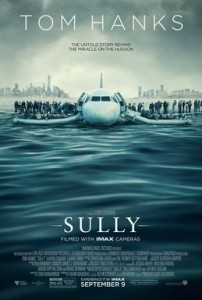 For those yearning for a solid Hollywood film with something to say, “brace for impact!” Director Clint Eastwood’s solid biopic Sully (A-) turns convention on its head with an interior examination of an American hero who followed his instincts and famously saved 155 people with a famed plane landing on the icy Hudson River and then doubts himself in the wake of evidence and scrutiny. Against the backdrop of an obsessive culture in which we meticulously pour over footage of pivotal events including the “Zapruder Film” of the JFK shooting, Eastwood’s clinical study of an unlikely emergency water landing combined with a quiet, restrained and mighty performance by Tom Hanks in the title role, makes for an emotionally exciting adventure wrapped in a contemplative piece of cinema. Minor quibbles include a discordant score (Eastwood wrote his own theme music) and a moment or two when the flashback-laden structure does a disservice to forward momentum. But it’s ultimately a stand-up-and-cheer/think experience, made even better by Aaron Eckhart as a charming first officer. Those who think they know the whole story already will be enriched by what Eastwood does here. It’s also an essential big screen theatre experience with magnificent sound and visual effects. With a tip of the hat to the pilot, his crew, the passengers and the first responders, it’s the hero story we may not have known we needed at this exact moment in time.

“Lazy Eye” Casts Gaze on Gay Love
 Tim Kirkman’s Lazy Eye (B) advances one of my favorite genres of film: the talky, plaintiff romance. This two-decades later Before Sunrise effect seems to be casting its spell into every corridor, from the early days of Barack and Michelle (the recommended Southside with You) to gay-themed stories of young love (Theo & Hugo). In Kirkman’s life-affirming entry in this genre, the story centers on two men whose romantic relationship ended 15 years ago but who are reunited to possibly rekindle their love affair anew. Lucas Near-Verbrugghe is the central figure, a bespectacled graphic artist in L.A. who has let many of his passions sputter; and Aaron Costa Ganis plays the dashing dreamer (the one who got away) re-entering the picture. Through both a modern story and flashbacks from 15 years before, rendered flawlessly, the audience follows the trajectory of a couple with great potential. There’s a very natural flow to the relationship and clear tension about what it could become. Although clearly committed to the role, Near-Verbugghe simply isn’t as strong a screen presence as Ganis, causing at times a lopsided narrative. In fact, Ganis is so charming in the role, most co-stars wouldn’t stand a chance. The characters aren’t quite as indelible as hoped, but Kirkman does a wonderful job creating a contemplative “what if” through line of theming. Additionally, the film transports viewers to an ethereal time and place in the West Coast desert, summoning a spiritual and cerebral atmosphere for asking the big questions about the choices we make.
Note: This film was screened at the Out on Film festival in Atlanta and is playing at additional festivals around the U.S. It premiered in NYC and Los Angeles mid-November and is now available for streaming and on-demand.

“Paris 05:59: Theo and Hugo” Sexy Then Sentimental
 Jacques Martindeau and Oliver Ducaste’s French language film Paris 05:59: Theo and Hugo (B-) can’t quite sustain the energy of its kaleidoscopic first act as it depicts an unexpected chronicle of young love with unfathomable origins. The central gay couple meets in a sex club in a series of sequences that might make the Marquis de Sade blush. It’s like Ken Russell, Baz Luhrmann and Spike Lee’s styles fused in a bathhouse burlesque. What follows is a sentimental love story à la Before Sunrise as the young men wander the streets and canals of Paris. The story is sweet, but some of the dialogue is forced. The magic of the storybook romance is not altogether convincing, and some of the plot points about unsafe sex feel vaguely like a cinema length public service announcement. Geoffrey Couët is passable as the naïve first-timer in the nightclub but not altogether comfortable in his character. François Nambot is the more capable actor who is clearly working harder to make the romantic connection palpable. The real-time nature of the story slows it down to a crawl while chance encounters with denizens of the city don’t really enhance the narrative. The film works best when the young lovers are sprinting through the Parisian streets, blissful about the “morning after” and what dreams the future may hold.
Note: This film was screened at the Out on Film festival in Atlanta and is playing at additional festivals around the U.S.

“The Goat” Tackles Hazing

It’s no surprise that a movie featuring Jonas brotherhood is complicated. After enduring a terrifying robbery and assault, a college-bound teenager played by Ben Schnetzer pledges the fraternity of his older sibling played by Nick Jonas. And while Andrew Neel’s anti-hazing true life melodrama The Goat (C+) is effective in its assault on the senses, it is a little less so on cogent narrative. Schnetzer and Jonas are subtle and sensitive in their roles, but their emoting is at the service of a scattershot story. The parade of emotional and physical abuse at Testosterone Manor doesn’t add up to much of a drama, mystery or thriller. Mostly the film is a clinical expose of what happens when young men value tradition over empathy, when the gates of Hell Week become a gateway to something more sinister; but the tale is told in such isolation from parents, other students including fleshed-out female characters and a larger community that it misses bunches of context. It’s all sensational but in the wrong sense of the word.

“London Road” a Fascinating New Form
 Rufus Norris’ adaptation of the West End musical London Road (B) is a curious case of hybrid musical documentary. This syncopation of vérité verse attends the tale of the plainspoken citizens of Ipswich, England, changed forever in 2006 by a quintet of killings of prostitutes who had emerged as curbside phantoms on the scene of a benignly neglected, sleepy borough. Actresses Olivia Colman and Anita Dobson lead an ensemble of sturdy players who brilliantly sing-speak the actual lines of a forensic investigation and subsequent media coverage of the aftermath of the murders, bringing humanity to the random viciousness befalling domestic tranquility. Even Tom Hardy, the most internationally recognized star in the film, has a nice singing bit as a roguish taxi driver tossing out conspiracy theories. Through the vocals of the victimized women living on the margins of town, we learn a little about the irony of a neighborhood watch wary for certain infractions and blind to a city’s most aching needs. Despite the chilling subject matter, there’s an overriding spirit of nihilistic dark comic glee that the filmmakers are having such a good time reinventing how a musical can take shape. Although recorded live, the dulcet dialogue has a delightful dubsmash quality with “ums” and “you knows” treated like they’re the angelic utterances of Jackie Evancho. The asymmetrical, casual quality of the music recalls Dancer in the Dark or Dr. Horrible’s Sing-Along Blog and makes this essential viewing for fanatics of the musical form in its perpetual evolution or of droll, defiant British storytelling. The narrative sometimes yearns to break forth a bit more from its mumblecore melodies and doesn’t really ever make that leap. It would have been interesting to see how an Alan Parker or Ken Russell would have dabbled with more forceful visual panache into this subject matter. As it stands, Norris has challenges honing in on the exact plum protagonists most worthy of our attention. And the procedural story isn’t quite shocking or special enough to warrant this passionate a cinematic treatment. Still, this unconventional yarn is a thrilling detour from traditional storytelling.

“Light Between Oceans” Dim
 It’s like Thomas Hardy crafted two thirds of an epic and let Nicholas Sparks finish the final chapters. Derek Cianfrance’s The Light Between Oceans (C), itself an adaptation of M.L. Stedman’s popular post-WWI Australian romance, features Michael Fassbender as a former soldier turned lighthouse keeper and Alicia Vikander as his new bride on an isolating island where intrigue about their offspring becomes the stuff of tempestuous melodrama. The presence of veteran Aussie actors Bryan Brown and Jack Thompson and a few verses of “Waltzing Matilda” are basically the clues you’re down under (thankfully no koalas) long before the narrative seeps below sea level. Fassbender and Vikander are wonderfully charming until their character motivations require them to become a bit stupefying. They commit to their craft well after the story strains credulity. A thankless supporting role does Rachel Weisz no favors. What starts out pulpy, electric and suspenseful simply becomes sudsy, irritating and overlong. Add to this mix an inconsistent narration, an overuse of reading letters and an awkward framing device, and you have the formula for a tepid September studio release.